Somewhere between tuition payments and the cost of textbooks, most students never stop to ask a simple question: how much of the technology powering their careers is already sitting there, free, waiting to be claimed? Every major technology company, from Microsoft and Google to Amazon, GitHub, and JetBrains, runs a dedicated program that hands verified students access to premium tools, cloud credits, and certification pathways worth hundreds or even thousands of dollars a year, entirely free. Most of these programs go underused not because they are hard to qualify for, but because almost nobody tells students they exist.
This guide brings every major free tech giant program together in one place, explains exactly what each one offers, and shows how a student with almost no budget can build a resume-ready portfolio of real cloud experience and industry-recognized certifications before ever paying for a single course.
Why This Matters More Than Ever for Students
Employers increasingly hire based on demonstrated skills rather than degree titles alone, and cloud platforms, developer tools, and productivity software have become the baseline expectation across nearly every technical and business role. A student who has already deployed an application on Azure, earned an AWS certification, or built a portfolio using professional design software walks into an interview with proof, not just claims. Free tech giant programs exist specifically to close that gap, because these companies benefit enormously from training the next generation of developers, architects, and analysts on their own platforms before those students ever enter the workforce.
GitHub Student Developer Pack
The GitHub Student Developer Pack remains one of the single most valuable bundles available to any student with a verified academic email address or other proof of enrollment. It bundles dozens of individual offers from partner companies into one application, including free GitHub Pro with unlimited private repositories, access to GitHub Copilot for AI-assisted coding, and credits or free tiers from cloud providers, domain registrars, and development tools that would otherwise cost real money. For a computer science student or self-taught developer building a portfolio, this single pack alone can eliminate most of the software costs typically associated with learning to code professionally.
Microsoft Learn, Azure for Students, and Certification Vouchers
Microsoft’s education ecosystem is built around two complementary pillars: free learning content and free cloud infrastructure to practice on. Microsoft Learn offers structured, self-paced learning paths covering Azure, Microsoft 365, Power Platform, and security topics entirely free, with hands-on labs built directly into the browser so students never need their own paid environment to practice. Azure for Students adds meaningful cloud credit on top of that, available without a credit card for verified students, making it possible to spin up virtual machines, databases, and web applications for coursework or personal projects at no cost. Microsoft also periodically offers discounted or free certification exam vouchers through partnerships with academic institutions, which can turn a semester of self-study into an officially recognized Microsoft credential without the usual exam fee.
AWS Educate and AWS Academy
Amazon Web Services runs one of the most comprehensive education initiatives in the cloud industry through AWS Educate, which gives students free access to cloud computing courses, hands-on labs, and promotional credit to experiment directly inside the AWS console. Students can work through structured learning plans covering cloud fundamentals, machine learning, and architecture without needing a corporate account or upfront payment. For institutions that partner directly with Amazon, AWS Academy goes a step further by offering a full curriculum that instructors can teach in the classroom, often preparing students specifically for AWS certification exams such as Cloud Practitioner or Solutions Architect Associate, which are among the most sought-after credentials in cloud hiring today.
Google Cloud Skills Boost and Google Career Certificates
Google’s contribution to student learning splits neatly into two tracks. Google Cloud Skills Boost, formerly known as Qwiklabs, provides interactive, hands-on labs inside real Google Cloud environments, and students can often access free credit through classroom partnerships, hackathon participation, or promotional campaigns run throughout the academic year. Separately, Google Career Certificates, delivered through Coursera, cover in-demand fields like IT support, data analytics, UX design, and cybersecurity, and are frequently available with financial aid or fully sponsored access for eligible students, removing the subscription cost that would normally apply. These certificates carry real weight with employers precisely because Google designed them in direct consultation with its own hiring teams.
JetBrains, Adobe, Canva, and Productivity Tools
Beyond the three major cloud providers, a long list of software companies offer free or heavily discounted access specifically to students. JetBrains provides free licenses for its entire suite of professional development environments, including IntelliJ IDEA, PyCharm, and WebStorm, tools that professional developers pay a subscription for in the workplace. Adobe offers meaningful education pricing on Creative Cloud for students pursuing design, video, or multimedia work, while Canva Pro is available completely free to verified students and educators, covering the kind of everyday design work needed for presentations, social content, and portfolio pieces. Notion, Figma, and several project management tools follow the same pattern, offering free education tiers that unlock features otherwise reserved for paying teams.
LinkedIn Learning and Free Certification Prep
Many universities include LinkedIn Learning access as part of their existing library or student services subscription, giving students access to thousands of professional courses covering everything from cloud certification exam prep to soft skills like communication and project management, all included at no additional cost. Pairing a structured LinkedIn Learning course with a free certification voucher from Microsoft, AWS, or Google Cloud creates a complete, guided path from zero knowledge to an industry-recognized credential without spending money on either the learning material or the exam itself.
How to Build a Free Certification Roadmap as a Student
The programs above work best when approached as a sequence rather than a random collection of sign-ups. A practical roadmap starts with foundational, vendor-neutral knowledge, moves into a single cloud platform chosen based on career interest, and finishes with a recognized certification that validates the skills gained along the way.
Step 1: Verify Your Student Status Early
Most programs require verification through SheerID, an academic email address, or an uploaded enrollment document, and approval can occasionally take a few days. Completing this step at the start of a semester, rather than waiting until credits or free trials are urgently needed, avoids unnecessary delays later.
Step 2: Choose One Cloud Platform to Focus On
Trying to learn AWS, Azure, and Google Cloud simultaneously tends to produce shallow familiarity with all three rather than real competence in one. Choosing a primary platform based on target career path, whether that is general cloud infrastructure, data and AI, or enterprise software, allows credits and study time to compound toward a single, meaningful certification rather than being spread too thin.
Step 3: Use Free Labs Before Spending Any Credit
Both AWS Educate and Google Cloud Skills Boost include guided labs that consume little or no promotional credit, making them the ideal starting point before moving on to self-directed projects that draw down the full credit balance. This sequencing stretches limited cloud credit significantly further across a semester or academic year.
Step 4: Book the Certification Exam While the Knowledge Is Fresh
Free vouchers and discounted exam pricing often come with expiration windows, so scheduling the actual certification exam soon after completing the associated learning path, while concepts are still fresh, produces both a better pass rate and a faster path to a resume-ready credential.
Step 5: Document Everything in a Public Portfolio
Certifications carry more weight when paired with visible proof of applied skill. Publishing project code on GitHub, writing short case studies about cloud labs completed, or sharing a earned certification on LinkedIn turns a private learning achievement into a public signal that recruiters and hiring managers can actually see.
Common Mistakes Students Make With These Programs
The most frequent mistake is signing up for every available free trial at once and completing none of them, which produces a scattered resume with no depth in any single area. A second common mistake is letting cloud credit expire unused, either from procrastination or from not realizing many programs operate on a strict annual or semester-based renewal cycle. Finally, some students treat certification exams as the finish line rather than the starting point, when in reality the certification is most valuable when immediately followed by a project or internship application that puts the new credential to work.
Final Thoughts
The barrier to building real, employer-recognized technical skills has never been lower for students willing to spend a few hours discovering what is already available to them for free. GitHub, Microsoft, AWS, Google, and a wide ecosystem of supporting tools have all made a deliberate bet that training students today builds their developer and customer base tomorrow, and that bet translates directly into free cloud credit, free software, and genuine certification support for anyone willing to claim it. The students who take full advantage of these programs before graduation consistently walk into interviews with a portfolio, a credential, and hands-on experience that their peers spent money to acquire, or never acquired at all.
See Also
-
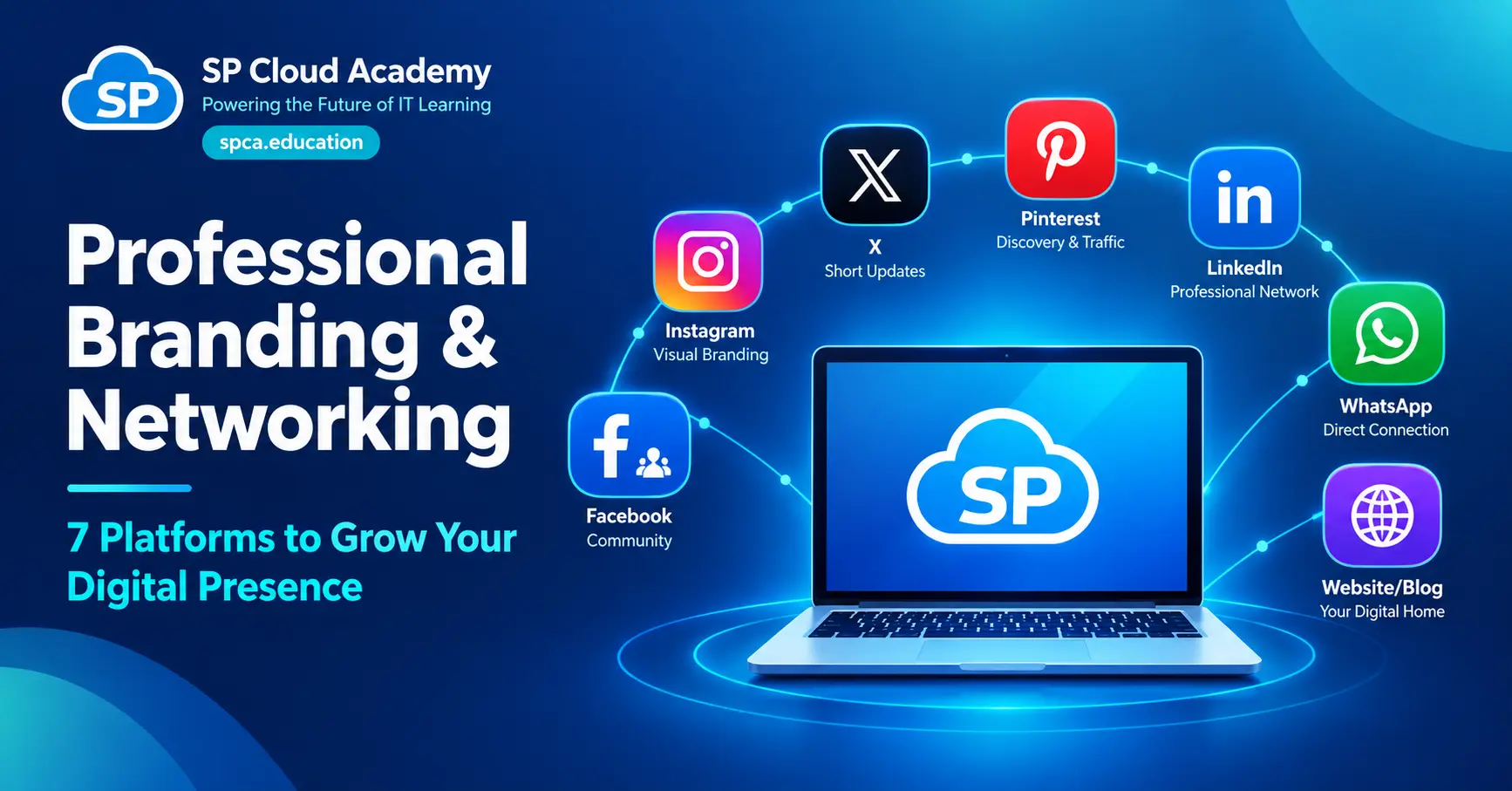
Professional Branding & Networking: 7 Platforms to Grow Your Digital Presence
-

Academic Excellence vs. Industry Certifications vs. Real-World Experience: The Formula for Career Success
-

Job vs Gig vs Remote: The Complete 2026 Comparison of Traditional, Freelancing, Outsourcing & Hybrid Work
-

How to Find the Right Mentor for Your Career in 2026: A Step-by-Step Guide to Faster Growth
-

IT Vendor Certifications in 2026
-

Network Technician vs Network Administrator vs Network Engineer vs Network Architect: Complete Skills Set, Mind Map & Career Roadmap (2026)
-

The Ultimate Student Guide to Free Tech Giant Services and Certification Support That Can Boost Your Career
-

Cloud Roles Explained: Architect vs Engineer vs Administrator vs Practitioner in One Complete Guide
-

All Startup Founders Are Entrepreneurs—But Not All Entrepreneurs Build Startups: Here’s Why It Matters